By a severer taste than mine these houses would all be mocked perhaps; yet I cannot help thinking that those who designed them and their gardens achieved their object, which was to suggest happiness.
– C. S. Lewis
The Weekend Design
The Beautiful and the Curious.

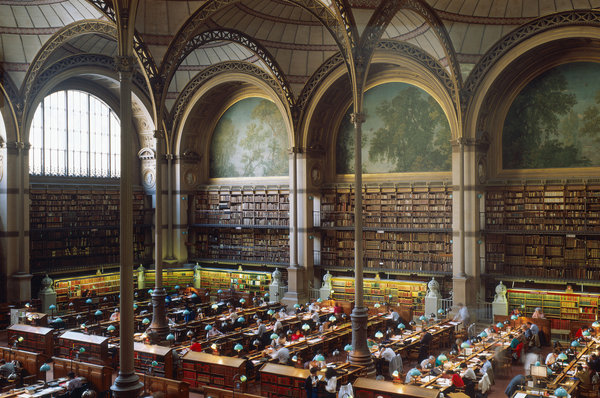
MOMA – Henri Labrouste: Structure Brought to Light
The MOMA is featuring an exhibition on Henry Labrouste March 10th through June 24th. I neglected to see the structures which are considered Labrouste’s seminal works: Bibliotheque Nationale and Bibliotheque Sainte-Genevieve in Paris, last summer. The MOMA’s exhibition explores how “influence can lead to innovation.” The academics, including French nationals, interviewed for the MOMA’s exhibition tell of how the appreciation for Labrouste was birthed by American architects–who saw Labrouste’s work with new eyes in the 1960’s. Since that time, appreciation for Labrouste has steadily grown and his structures more ardently admired. The exhibition discusses the impact of technology on public spaces and the envisioned future of the public library. The video below brought to my attention the proposed modernization of the New York Public Library, which we will discuss soon. I have an almost instinctual rejection at the thought.
Labrouste is credited for a host of proficiencies. I couldn’t put it any better than the New York Times piece by Michael Killaman, “In our era of starchitects he makes an instructive case for his unwillingness to compromise, his dedication to function, his decorative originality and his unorthodox hybrid aesthetic, which married industry to classicism.” Take a peak and watch the videos–particularly the French academics!


Smithsonian Photography Contest
The Smithsonian conducts an annual photography contest–some of the 2012 finalists are below. The first photo, taken in a small church in Nazareth, is my favorite. Their eyes, goodness. To see all the 2012 finalists, click here.



Timing and A Garden Table
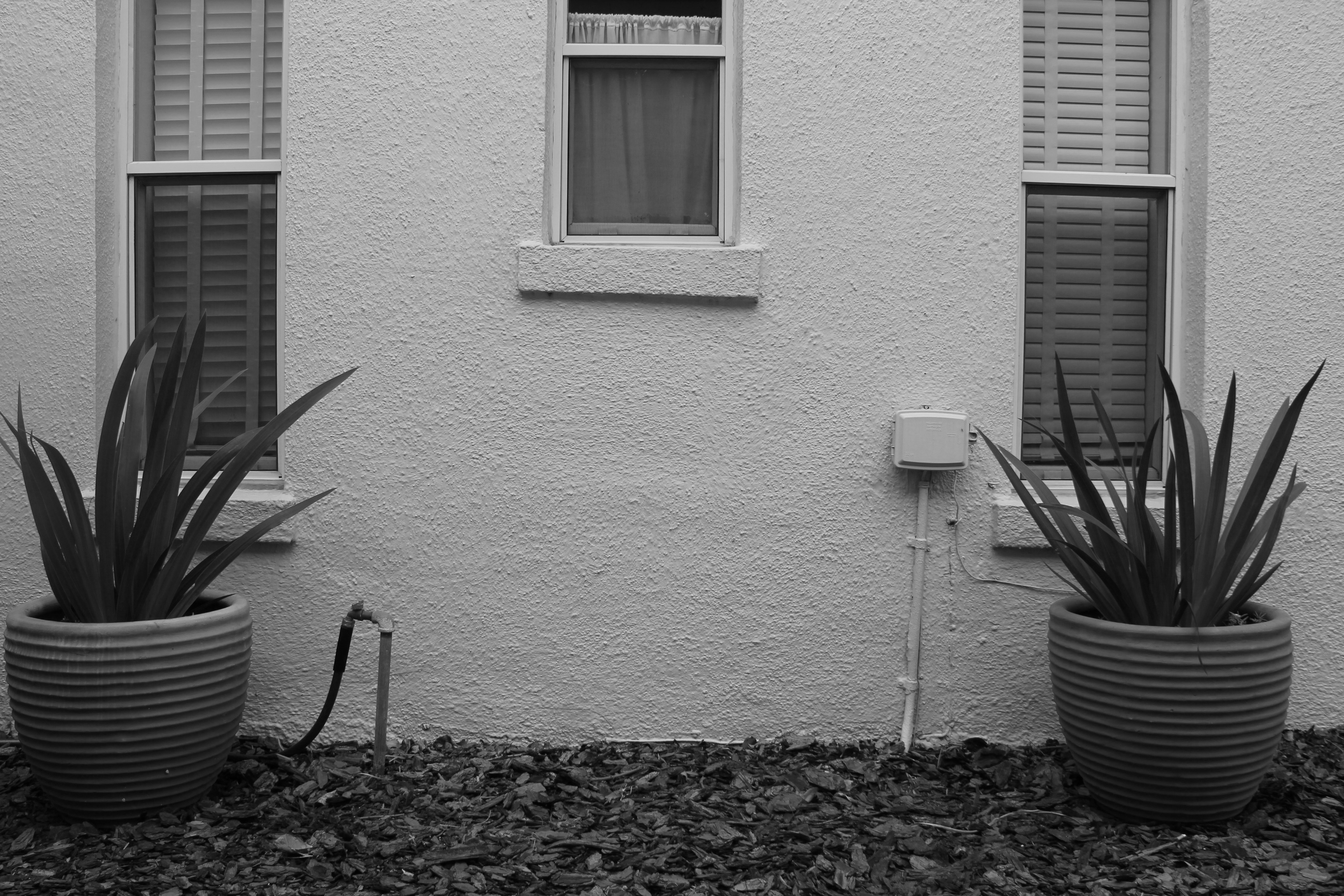 There is a delicate balance in being a renter, reminiscent of walking this life. There must be equal footing in the temporal and the other. As a renter, it is important to establish roots, careful to remember some roots are painful, if not impossible, to uproot. This reality drives the constant discrimination between potted plants and those firmly rooted in the ground. For my side yard, I was given a blank space, with mulch only being added a little under a year ago. I decided I would add that which I could take with me (whenever that may be). I started with pots to flank the center of the structure and over-sized irises which I’ve newly discovered (happy as clams). Then, came the inevitable waiting for the right garden table. On a whim, I visited the lovely Virginia of Chinoiserie Antiques in Fort Meade. Chinoiserie Antiques = Destination. I visited for the good company and beautiful store and came home with the table I couldn’t before describe but knew I’d recognize. I am excited by the extension of my garden. It broadens the project which is my ‘front lawn,’ giving me more to piddle with.
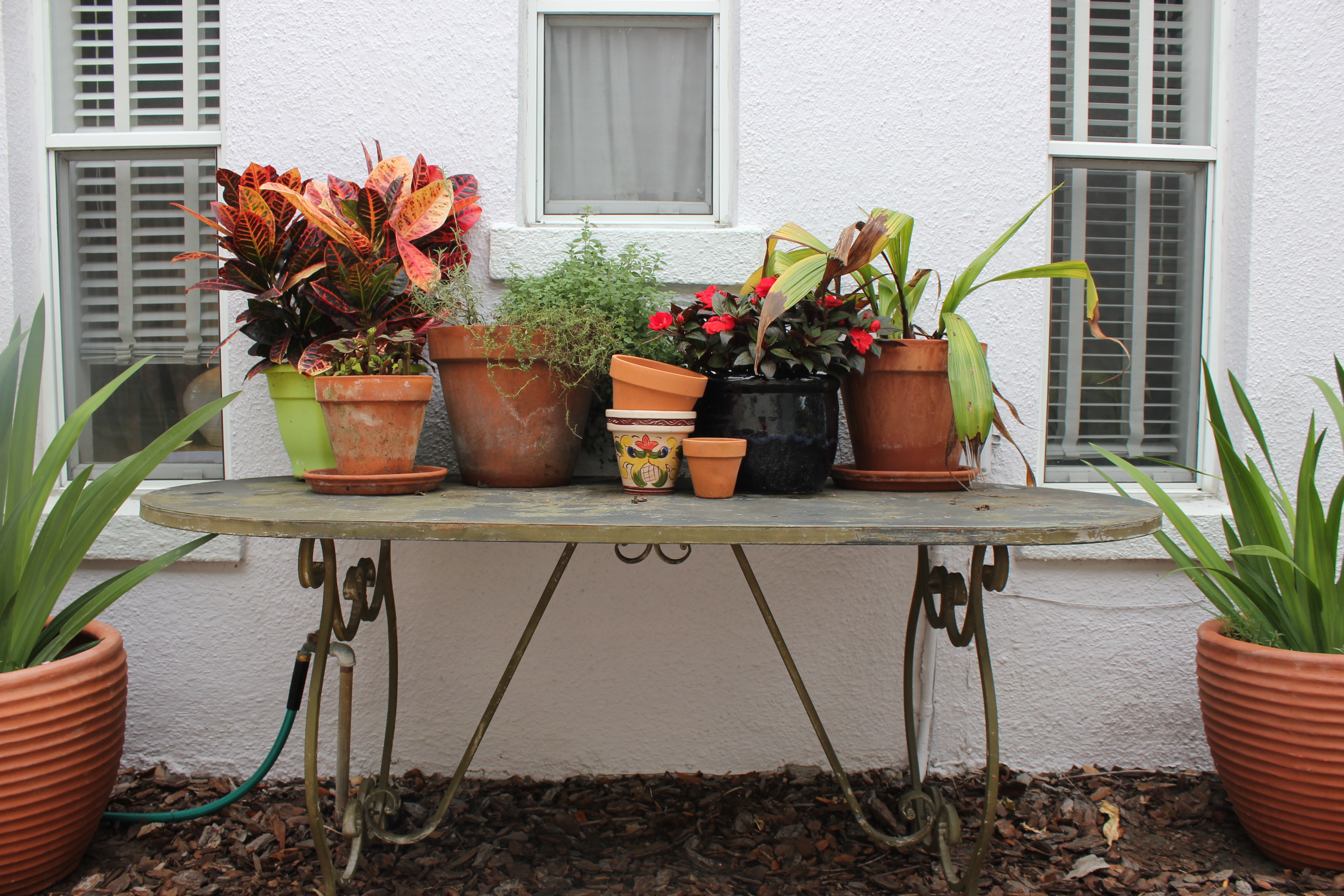
The table is zinc with a wonderful patina. Zinc does not rust, rather, it corrodes. Which, in this case, given its days, has produced the most pleasing olive hue.


New Digs
To change one’s life:
1. Start immediately.
2. Do it flamboyantly.
3. No exceptions.-William James
I felt we needed a new canvas and enlivened palette. Hope you enjoy the new digs; same content, fresh wares.
Impressionism, Fashion, and Modernity
I am so sad to miss this exhibition. My Firm is shipping me off to NYC this summer for a week CLE (Continuing Legal Education) on drafting trusts. Admittedly, I’m looking forward to the experience, not to speak of being in the City for a week—plus a post weekend stay for good measure. All that to say, I won’t be shipped up until this exhibition is shipped out. So let’s dig in and try to absorb from a distance.
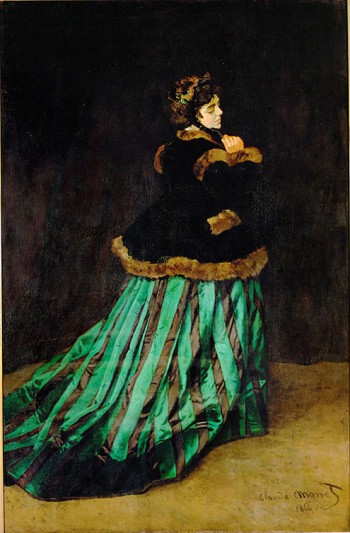
The exhibition Impressionism, Fashion, and Modernity is an exploration of the interplay between modern culture, fashion, and the the painter during the 1860’s through the 1880’s. The exhibition includes works by Renoir, Manet, Monet, Degas, Cassatt, and others—a collaboration of incredible pieces from permanent collections the world over.
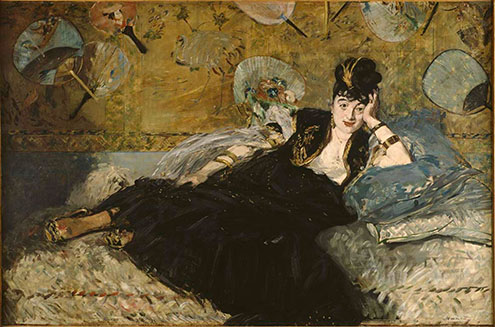
The narrative reminds the viewer that this period was when Haussmann was recreating the urban landscape of Paris—the oft admired rows of apartments. These apartments stand today and beautifully line the city streets. So interesting to understand the propriety and innovation of the period in which these paintings were created.

The exhibition speaks of the shift in the focus of the portraits in this period—an acute awareness of the hem to a more attuned attention to light and shadows. It addresses the drama displayed by those clad in white and those in black. And, also the simplicity of the man’s dress of the day—love these paintings. Read more about the exhibition—not too long and quite insightful.
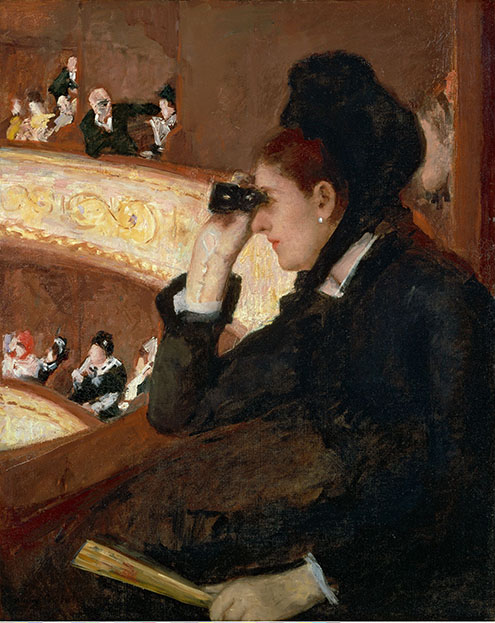
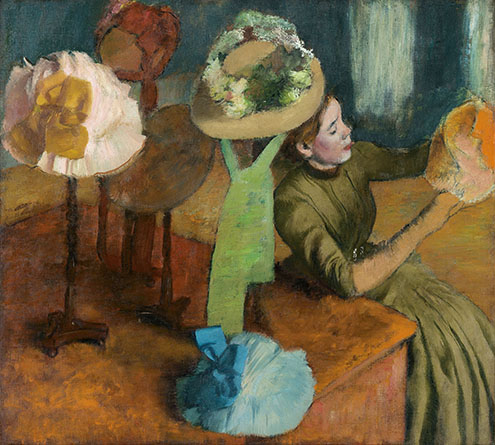


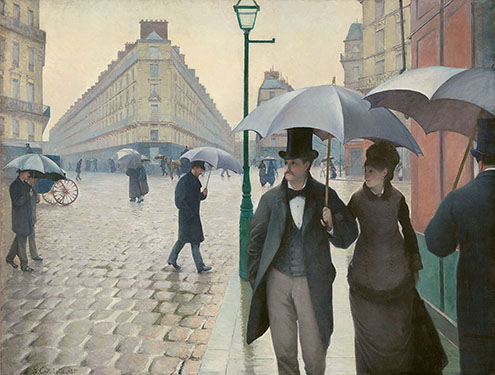
Claude Monet (French, 1840–1926). Camille, 1866. Oil on canvas; 90 15/16 x 59 1/2 in. (231 x 151 cm). Kunsthalle Bremen, Der Kunstverein in Bremen; Édouard Manet (French, 1832–1883). Lady with Fans (Portrait of Nina de Callias), 1873. Oil on canvas; 44 1/2 x 65 9/16 in. (113 x 166.5 cm) Musée d’Orsay, Paris, Bequest of M. and Mme Ernest Rouart; Mary Cassatt (American, 1844–1926) In the Loge, 1878. Oil on canvas; 32 x 26 in. (81.3 x 66 cm). Museum of Fine Arts, Boston, The Hayden Collection, Charles Henry Hayden Fund; Edgar Degas (French, 1834–1917). Portraits at the Stock Exchange, 1878–79. Oil on canvas; 39 3/8 x 32 1/4 in. (100 x 82 cm). Musée d’Orsay, Paris, Bequest subject to usufruct of Ernest May, 1923; Edgar Degas (French, 1834–1917). The Millinery Shop, ca. 1882–86. Oil on canvas; 39 3/8 x 43 5/8 in. (100 x 110.7 cm). The Art Institute of Chicago, Mr. and Mrs. Lewis Larned Coburn Memorial Collection; Gustave Caillebotte (French, 1848–1894). At the Café, 1880. Oil on canvas; 60 1/4 x 44 15/16 in. (153 x 114 cm). Musée d’Orsay, Paris, On deposit at the Musée des Beaux-Arts de Rouen
Change

If you don’t like change, you’re going to like irrelevance even less.
There are few things in life more constant than change and transition. I often rearrange my home. To (1) choose the change and (2) render it instantly, is deeply satisfying.
I had a temporary roommate in my space, which was delightful and frightfully short-lived. Her moving out spurned the inspiration to swap what was my office for my bedroom and vice versa. I’m very pleased. My bedroom is peaceful and soothing—that stage where it remains uncluttered and fresh. It’s the first bedroom arrangement here that, despite the twin bed, doesn’t remind me of a dorm room.
Demilune
Thought we would tighten our vernacular by addressing the ever-helpful demilune [dem-ē-ˌlün] table. A demilune is an occasional table which is always rounded and often includes a shelf or drawer—it can be crafted in most any style or aesthetic. As you might suspect, the demilune takes its name by way of its shape—a half moon. It incredibly versatile—lacking boxy corners—snugly fitting in tight quarters, such as hallways or foyers. If one’s space permits, a pair of demilunes nicely flank a doorway and may also be paired to make a small table. Always a smart purchase for most any space in your house.


Demilune Wood Console – Mecox Gardens (Photo by Geoffrey Sokol). Abeille Demilune – Ballard Designs. Belle Epoch Console Table – Spurgeon-Lewis Antiques – 1st Dibs.
David Hicks
An article I recently read in Veranda referenced David Hicks during a discussion of trellis patterns. Hicks was of relevance for his utilization of pattern, many of them deeply traditional (like the trellis), coupled with modern whimsy and bright colors. Hick’s work seems as big as was his personality—married to an aristocrat and apparently steeped in his opinion of himself. Hicks passed away in 1998, but his work endures and inspires many, including the avid Jonathan Adler. I was entertained by a description of Hick’s disdain for chintz by Minn Hogg in an article in the New York Times: “…He killed every flower in his soul… . His was a rigorous, very tailored look. So much of it was about control. There wasn’t a wrinkle or crease anywhere.” His work clearly defined much of what is mid century modern. He is credited for successfully marrying modern with traditional–geometrics with antiques. A simple trademark of David Hicks: patterned carpet. His daughter, Ashley Hicks continues her father’s legacy with fabrics and interiors reminiscent of her father’s flair.
It is perhaps I who have made tablescapes – objects arranged as landscapes on a horizontal surface – into an art form; indeed, I invented the word . . . What is important is not how valuable or inexpensive your objects are, but the care and feeling with which you arrange them. I once bought six inexpensive tin mugs in Ireland and arranged them on a chimneypiece to create an interesting effect in a room which otherwise lacked objects. They stood there in simple perfection.
I dislike brightly coloured front doors – they are more stylish painted white, black or other dark colours. I hate wrought iron. I loathe colour used on modern buildings – it should be inside. I do not like conventional standard lamps – I prefer functional floor-standing reading lights. Function is just as important as aesthetics . . . Function dictates design.
Good taste is something which you can acquire: you can teach it to yourself, but you must be deeply interested. It is in no way dependent upon money.
The best rooms have something to say about the people who live in them.
An enormous number of ideas come to me whilst I am lying in the bath in the morning or the evening, so I always have something readily at hand with which to write.
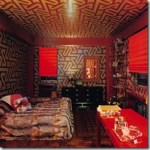
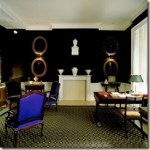


Owens, Mitchell. “David Hicks, 69, Interior Design Star of the 60’s, Is Dead.” New York Times. 2 April 1998. David Hicks, Living with Design. Weidenfeld & Nicolson 1979. Photos: David Hicks (photo by Norman McGrath); David Hicks (David Hicks Archive); David Hicks (David Hicks Archive) David Hicks (David Hicks Archive).
 The Weekend Design